DAReS Software -- DART


The Data Assimilation Research Testbed -- DART

cool
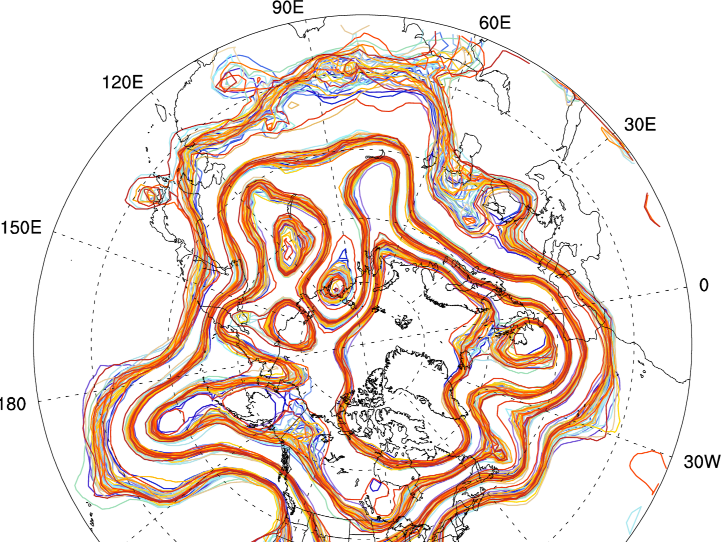
spaghetti plot of North America demonstrating the uncertainty among the
ensemble members
The 500hPa geopotential height from 20 ensemble members of an 80 member experiment with a T85 resolution of CAM (00Z 01 Feb 2003). The contour sets are from 5320 to 5800 by 80.

Welcome to the home page for the Data Assimilation Research Testbed (DART).

If you are using DART: you need to know about recent (2Jun2008) changes.

Overview Topics

Getting Started

The DART software provides a flexible, extensible framework for conducting data assimilation research on a wide variety of models and observations. In order to facilitate the incorporation of new models (which, in the Atmospheric Science community are generally written in F90), the DART software is written primarily in F90. The noteable exceptions are the shell scripts that control execution and the Matlab® diagnostic scripts.

The DART system comes with many models - ranging from 1-dimensional Lorenz systems to the dynamical core of a full atmospheric model. DART also has an extensive tutorial that explains typical DART experiments and explores many aspects of ensemble data assimilation. The tutorial is an entire directory in the DART software distribution, so it can be browsed (it is a series of .pdf files) Download the DART source code and follow the instructions on the web page for the current release for instructions on how to build an executable, run the "workshop" experiments, and look at the results.

DART requirements

DART is intended to be highly portable but has a strong Unix/Linux preference. DART has been run successfully on Windows machines under the cygwin environment. Those instructions are under development - if you would like to be a friendly beta-tester please send me (Tim Hoar) an email and I'll send you the instructions, as long as you promise to provide feedback (good or bad!) so I can improve them. My email is   thoar @ ucar . edu - minus the spaces, naturally. Minimally, you will need a Fortran90 compiler and the netCDF libraries built with the F90 interface. History has shown that it is a very good idea to make sure your run-time environment has the following:

limit stacksize unlimited
limit datasize unlimited

If you want to run your own model, all you need is an executable and some scripts to interface with DART - we have templates and examples. If your model can be called as a subroutine, life is good, and the hardest part is usually a routine to parse the model state vector into one whopping array - and back. Again - we have templates, examples, and a document describing the required interfaces. That document exists in the DART code - DART/models/model_mod.html - as does all the most current documentation. Every(?) DART program/module has a matching piece of documentation.

Starting with the J release, there is an option to compile with the MPI (Message Passing Interface) libraries in order to run the assimilation step in parallel on hardware with multiple CPUs. Note that this is optional; MPI is not required to run the J release. If you do want to run in parallel, then we also require a working MPI library and appropriate cluster or SMP hardware. See the MPI intro for more information on running with the MPI option.

One of the beauties of ensemble data assimilation is that even if (particularly if) your model is single-threaded, you can still run efficiently on parallel machines by dealing out each ensemble member (an unique instance of the model) to a separate processor. If your model cannot run single-threaded, fear not, DART can do that too.

DART tested platforms/models/compilers

DART is intended to be highly portable - and has even run successfully on Windows machines running the cygwin environment. Those instructions are under development and so are not included in the following table. The most current version of DART (Jamaica) has been tested on the following:

hardware O/S F90 compiler batch manager
Intel cluster/SMP/32 bit Red Hat Enterprise Intel 9.0 (build 20051201) none
Intel cluster/SMP/32 bit Red Hat Enterprise GNU Fortran 95 4.1.0 none
Intel Nocona SUSE PGI 6.0-8 LSF
Intel Nocona SUSE Intel 9.1 (EM64T) LSF
Intel iMac Mac OS X 10.4.6 gfortran 4.2.0 Open-MPI
IBM Power 5+ AIX 5.3 XLF 10.1.0 LSF
Intel Fedora Core 4 Intel 9.0 none
PowerBook G4 (PowerPC) Mac OS X 10.4.8 Absoft Pro Fortran 9.0 none
PowerBook G4 (PowerPC) Mac OS X 10.3.9 Absoft Pro Fortran 9.0 Lam
PowerBook G4 (PowerPC) Mac OS X 10.3.9 gfortran 4.2.0 Lam
Intel cluster (Xeon) Fedora Core 2 PGI 6.0-5 PBS
Intel cluster (Xeon) Fedora Core 2 PGI 5.2-4 PBS
Intel cluster (Xeon) Fedora Core 2 Lahey 6.20c PBS
IBM cluster (of opterons) SUSE Enterprise 8 Pathscale 2.4 LSF
IBM cluster (of opterons) Suse Enterprise 8 Intel 9.1 (EM64T) LSF
IBM cluster (of opterons) Suse Enterprise 8 PGI 6.2 LSF
SGI Altix SUSE Linux ES 9.3 Intel 9.1 PBS
SGI MIPS IRIX 6.5 MIPSpro 7.4.3m NQS
Linux cluster Intel Intel 9.1 PBS

DART code distributions

DART is distributed primarily through an anonymous-access readonly Subversion (SVN) repository. This makes updates and comparisons between your sandbox and the latest, greatest version of the code trivially easy. The same cannot be said with a TAR file. If you are not familiar with SVN (the client application of subversion), you should take a stroll through my svn primer If you cannot (i.e. are firewalled out) use svn, please let me know and I'll send you a tarfile ... as a last resort.

Since the DART software is still an area of active research, there are multiple distributions, with more on the way. We'd like to be able to contact people to inform them of any bugs or updates. (This includes local users, BTW!) As you can see by the timetable of distributions, you could expect to get about 2 more emails per year, so PLEASE use a real email address when signing up. I solemnly swear to protect your email address like it is my own!

download instructions for the latest releases.

The Jamaica version of DART (the latest 'official' release) has the following attributes for this file. Since svn uses 'mixed revisions', files in the distribution will have different revision numbers. If you download the 'trunk' (the latest version) - the revision numbers are assuredly different.

Revision: Revision: 2857
Source: URL: http://subversion.ucar.edu/DAReS/DART/trunk/doc/html/index.shtml
Change Date: $Date: 2007-04-12 10:44:44 -0600 (Thu, 12 Apr 2007) $

version date instructions most noteable change(s)
trunk today included in distrib. varies, see next section below for details
jamaica 12 Apr 2007 [doc] vertical localization, extensive testing of MPI implementation, full documentation for new algorithms, new tutorial sections
change log
pre_j 02 Oct 2006 [doc] contains an updated scalable filter algorithm
post_iceland 20 Jun 2006 [doc] observation-space adaptive inflation, bug fixes,
merge_obs_sequence support ...
change log
iceland 23 Nov 2005 [doc] huge expansion of real observation capability
better namelist processing, PBL_1d available.
change log
pre_iceland 20 Oct 2005 for developers only huge expansion of real observation capability
DA workshop 2005 13 June 2005 docs included in distrib. tutorial directory in distribution, observation preprocessing
hawaii 28 Feb 2005 [doc] new filtering algorithms
pre-hawaii 20 Dec 2004 [doc] new filtering algorithms
guam 12 Aug 2004 [doc] new observation modules, removing autopromotion
fiji 29 Apr 2004 [doc] enhanced portability, CAM, WRF
easter 8 March 2004 [doc] initial release

User-Visible changes to the TRUNK (circa 2 Jun 2008)

Some ideas are just too good to postpone till the next major release. The following changes to the DART trunk code may require you to take additional action after an update:

  1. Additional function added to the preprocess program also means that you now only need to have obs_def_mod.f90 in your path_names_* files and it will include the code for all other obs_def_* modules automatically. If you have additional obs_def lines for gps, altimeter, or other specialized obs_def files, they must be removed or you will get an error similar to this:
    AMBIGUOUS: Module obs_def_gps_mod is associated with ../../../obs_def/obs_def_gps_mod.f90 as well as ../../../obs_def/obs_def_mod.f90.
    Adding and removing various obs_def files now only involves changing the &preprocess_nml:input_files namelist item in the input.nml file. We will update all path_names_* files in the DART subversion (svn) repository; this only applies to files you have that are not under svn control.

  2. All model work directories now have a quickbuild.csh script instead of workshop_setup.csh. The workshop script still exists in some model directories, but may change in upcoming releases to accomodate DART tutorial workshops. The quickbuild script recompiles all the programs; it does not try to run any of them. By default it builds all small models without MPI, and builds the large models (CAM, WRF, AM2) with MPI. It takes -mpi and -nompi arguments.

  3. The MPI version of filter would sometimes not kill the entire job if one task failed. This resulted in jobs hanging and using up computing resources unnecessarily. We added a new routine to the utilities_mod.f90 called exit_all(). For MPI-enabled jobs it calls MPI_Abort() to inform all other tasks that one has failed. This should cause an MPI job to exit immediately on error. Nothing new happens for programs which do not use MPI. However, this change requires adding the mpi_utilities/null_mpi_utilities_mod.f90 file to many of the path_names_* files where it was not required before. It might also require adding time_manager/time_manager.f90 if it is not already there. We will update all path_names_* files in the DART subversion repository, but you may have programs of your own that use utilities_mod routines - in which case your programs will now need to link with null_mpi_utilities_mod. Without it, the error you see will be similar to this:
    /usr/bin/ld: Undefined symbols:
    _exit_all_

  4. The default mpi interface utility code should now compile as-is for every supported compiler except gfortran. (You should no longer need to go into the code and edit the interface block for the system function.) If you are using the gfortran compiler, in the $DART/mpi_utilities directory you will find a script called fixsystem that you can run to make the file compile without having to edit it by hand.

DART Tutorial Materials and Presentations

The DART system comes with an extensive set of tutorial materials, working models of several different levels of complexity, and data to be assimilated. It has been used in several multi-day workshops and can be used as the basis to teach a section on Data Assimilation. Download the DART software distribution and look in the tutorial subdirectory for the pdf and framemaker source for each of the 22 tutorial sections.

Browsing the tutorial directory in the distribution is worth the effort. Taking the tutorial is FAR better!

Presentations about DART:

The FULL list of presentations (as well as some of the presentations themselves) and publications is available on our Publications page. A short list of presentations, posters, and seminars is offered below:

Related Links

DART Contact list

We're a very small group, so the contact list is pretty short. We don't have a central contact email address, but we all know how to forward email to each other. So no matter who you send the email TO, it will find its way to the best person. Pretty cool, eh?

general general platforms/mpi CAM
Jeff Anderson Tim Hoar Nancy Collins Kevin Raeder
jla @ ucar . edu thoar @ ucar . edu nancy @ ucar . edu raeder @ ucar . edu