
Adjoint transport model
§If number of flux regions > number of measurement sites, then instead of running transport model forward in time forced by fluxes to fill H, run adjoint model backwards in time from measurement sites
§
§
§
§
§
§
§What is an adjoint model?
§If every step in the model can be represented as a matrix multiplication (= Ôtangent linear modelÕ), then the adjoint model is created by multiplying the transpose of the matrices together in reverse order
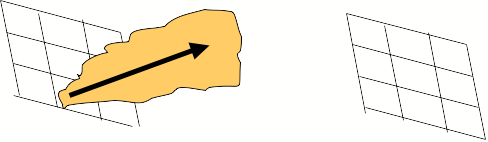
FWD
*
*
*
*
*
*
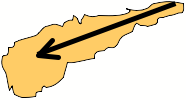
ADJ
flux
grid
measurement
sites
This strategy can reduce the number of transport models runs needed.  However, may not help to solve for many more regions than data points -- they will tend to be under-constrained and anti-correlated.  Will see another way of how adjoint can be used when discussing variational data assimilation laterÉ

What to do about storing and inverting a really big matrix, though?  Usually, all that info does not need to be together in one big matrix.  There is usually a time scale after which things become less important.  SoÉ break up the time span into shorter bits and do smaller inversions for each of these.  This idea leads to the Kalman filterÉ